
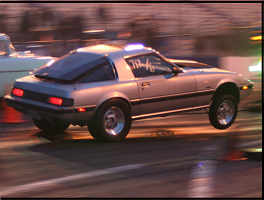
A hard-hitting clutch can easily over-power shocks, resulting in excessive chassis reactions that exceed bushing compliance limits and available suspension travel. Then when the suspension suddenly reaches it's hard limit, the resulting impact knocks the tires loose. The spinning tires allow the suspension to relax a bit, which in-turn allows the tires to hook back up momentarily until the suspension again reaches it's hard limit. Wheelhop is that cycling back and forth between traction and no traction. First reaction is often to calm things down with shock adjustments. Because shocks only serve to absorb energy without giving any back, tightening them should be one of your last resort solutions.
Rather than stiffen the shocks, you might want to try slowing down the rate that the clutch feeds inertia into the chassis. Easy to do if you have a 2-stage clutch hit controller. Far less wear/tear on drivetrain components, sidewalls will also last much longer. After you discover that you can control the rate that inertia energy is fed into the chassis, you will then soon realize that there's not much keeping you from packing even more rpm/energy into the engine's rotating assy prior to launch.
Also be aware that excessively stiff shocks will reduce your chassis' ability to maintain traction over bumpy surfaces down the track. Your tires might skip right across those bumps! The key to a quick stick shift 60' is a proper soft hitting clutch that allows hi-rpm launches without killing parts!
We also recommend zero front spring pre-load at full extension. The reason is the more pre-loaded the front springs are when they top out, the more that topping out will upset the chassis. In the end you don't want one of those little "jerk the tires off the ground" preload wheelies that upsets the chassis, you want the car to gracefully carry the front down the track. If you can't get the springs to un-load with extension travel maximized, you might want to install stiffer springs that un-load with less travel.
Slowing front travel with stiffer shocks to the point that pre-loaded springs don't get a chance to top out would be my last resort.
Chapter 01- The Basics of Inertia Management
Chapter 02- Calculating Inertia's Effect on Input Shaft Torque
Chapter 03- Clutch Slip After the Shifts... Good or Bad?
Chapter 04- Heavier Cars LESS Likely To Break Transmissions?
Chapter 05- Understanding The ClutchTamer
Chapter 06- Understanding The Hitmaster
Chapter 07- The Basics of Analyzing Dragstrip Data
Chapter 08- Flywheel Weight- Heavy or Light?
Chapter 09- Choosing a Proper Clutch & Pressure Plate
Chapter 10- The Importance of a Clutch Pedal Stop
Chapter 11- What's the Best Launch RPM?
Chapter 12- Do You Need a 2-Step Rev Limiter?
Chapter 13- Traction Problems- Adjust Shocks, Chassis, or Clutch?
Chapter 14- Are "Clutchless" Shifts Right For You?
Chapter 15- Traction Control- Yes or No?
Chapter 16- Apply ClutchTamer Tech to an Adjustable Clutch?
CHANGING THE GAME ON LAUNCHING YOUR STICK SHIFT CAR!!!